Preservation

This is a demonstration archive, and Eleanor is fictional by design. Real family archives on Preservation are private, so rather than put a real family on display, we wrote one. Nothing here belongs to a real person, which is exactly how your archive will be treated too.

Nell

Eleanor Marie Doyle

b. 1938 · Cleveland, Ohio

Nurse, night shift, thirty-one years. Italian on her father's side, stubborn on both.

41
stories
3,468
words in their own voice
12
photographs
3
letters and papers

Ask Nell

Every answer shows where it came from, and says plainly when the archive doesn't hold enough to answer.

Answers here are generated from Nell's preserved materials. They may summarise or interpret their words. This is not Nell.

Try asking:

A life in moments

  1. 1946photo

    Photograph

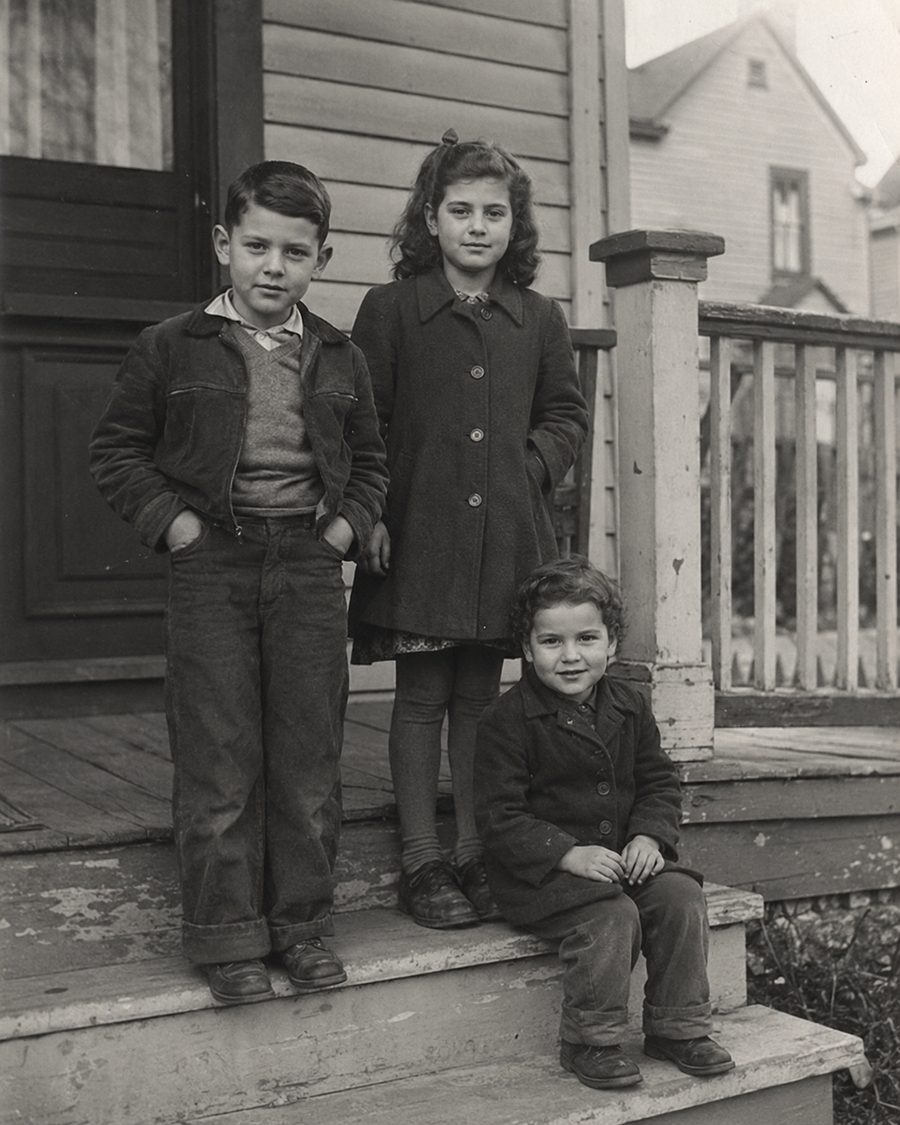
    The Russo children on the porch steps on Mayfield. Danny is the one squinting. Nell is in the middle in the dress her mother made from a curtain.

  2. 1952photo

    Photograph

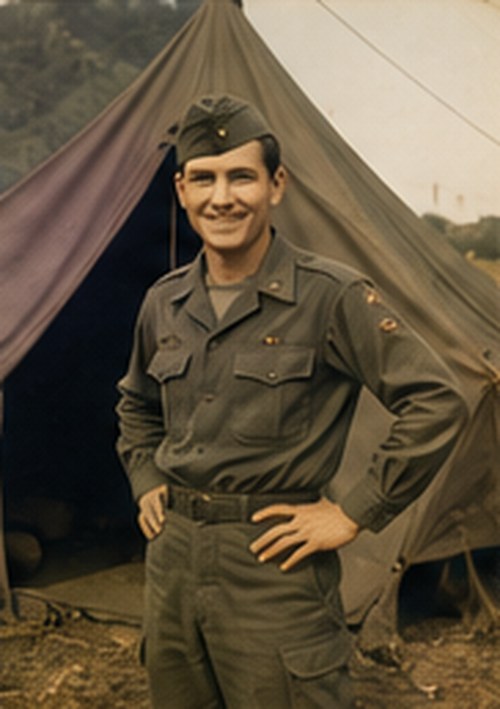
    Danny in Korea, 1952. He sent it to their mother with nothing written on the back.

  3. 1952document

    Letter from Danny, Camp Pendleton

    Nell, Tell Ma I'm eating. Tell her twice, she won't believe it the first time. It's hot here in a way that Cleveland doesn't do. Everybody's from somewhere I ne

Show all 27 moments
  1. 1953story

    What jobs have you had, in order?

    Cleaning at the funeral home on E. 62nd, Saturdays, from about 1953. Then nurse's aide at St. Alexis while I was training, 1956 to '59. Then floor nurse at St.

  2. 1954story

    Tell me about a car you remember.

    A 1954 Chevrolet Bel Air, second-hand, green, bought in 1961 for something like three hundred dollars. The heater didn't work and Cleveland is Cleveland, so we

  3. 1954story

    What did you want to be when you were young, before anyone talked you out of it?

    A doctor. And nobody talked me out of it exactly, it just was not a sentence anybody said out loud in that house in 1954. Sister Bernadette said don't be a secr

  4. 1959photo

    Photograph

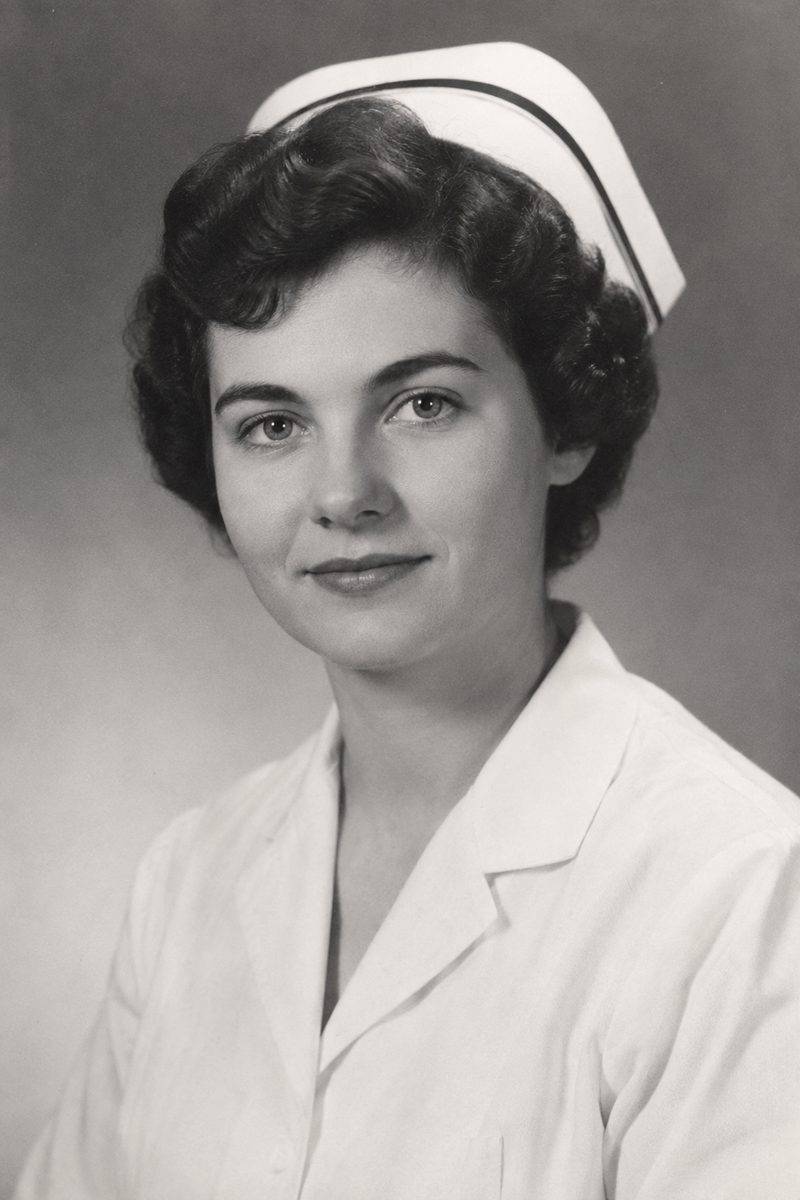
    Nell in her graduation whites, St. Alexis Hospital School of Nursing. She said the cap never stayed on and she hated it her whole career.

  5. 1961photo

    Photograph

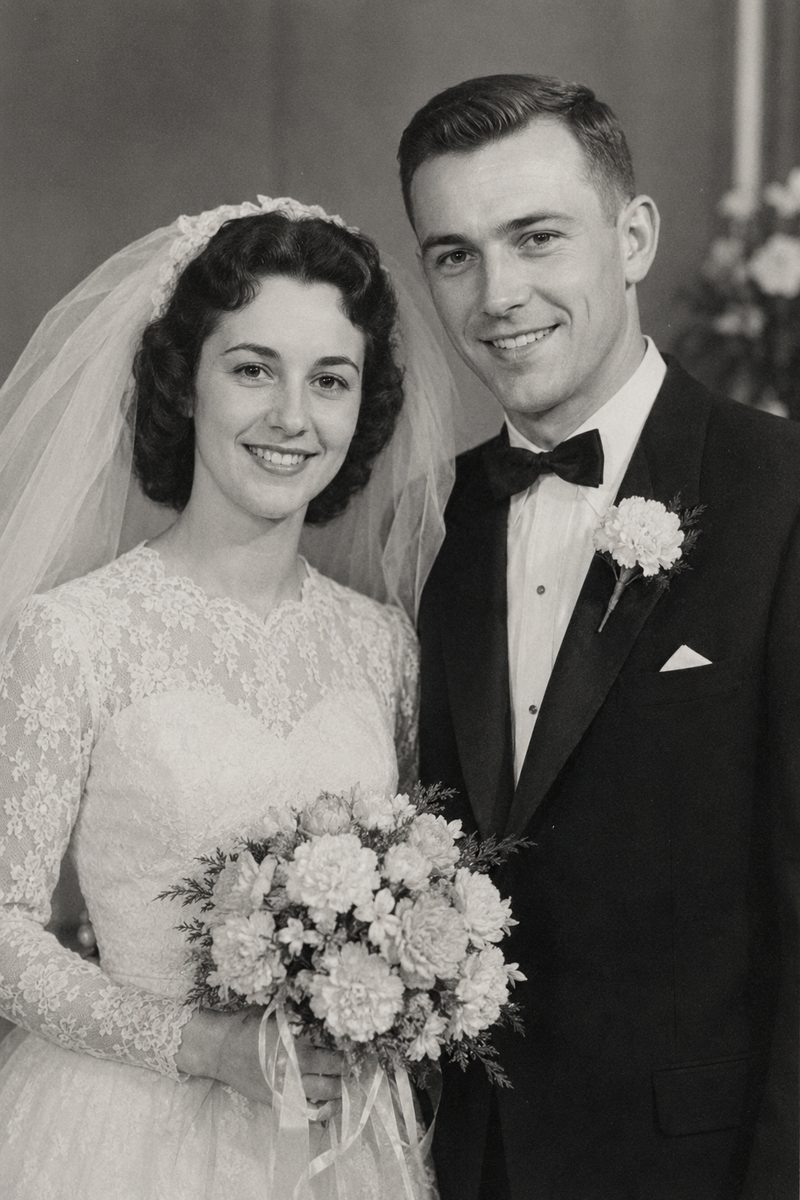
    Wedding at Holy Rosary, June 1961. Frank Russo on the left, not smiling, which Nell insisted meant he was pleased.

  6. 1962photo

    Photograph

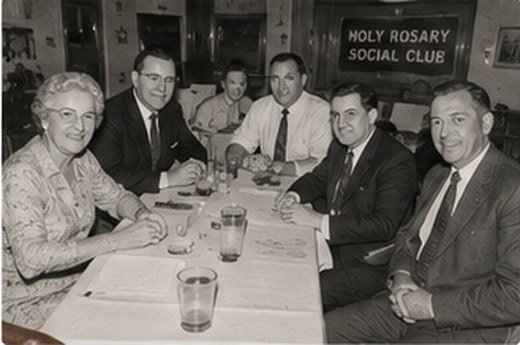
    The Holy Rosary Social Club, 1962.

  7. 1963story

    Where's your favourite place to sit in your own home?

    The kitchen chair nearest the window, facing the back steps. I've sat there since 1963. Walter's chair was the other one and nobody sits in it, not because of a

  8. 1963story

    Tell me about getting the house in Parma.

    The house on Ridgewood in Parma, 1963. Fourteen thousand, eight hundred dollars. Walter's hands shook signing it. We had a card table and two chairs in the fron

  9. 1966story

    What was the best trip you ever took?

    Geneva-on-the-Lake, every August from about 1966. Walter rented the same cottage six summers running and it was a bad cottage. The roof let go every time it rai

  10. 1968story

    What do you want your grandchildren to know about you that they'd never guess?

    That I was funny. I don't think they've got any idea. By the time you all knew me I was the grandmother in the chair with the opinions. But I was very funny in

  11. 1970story

    Walk me through an ordinary workday at the job you held the longest.

    Nights at Parma Community, from 1970 until I retired in '96. Eleven to seven. I'd leave the house at ten-thirty with Walter already asleep and the kids' lunches

  12. 1970story

    Is there something you've never said out loud that you'd want us to hear?

    I should have gone to California and found Danny. I had the money by 1970 and I had the time and I told myself I didn't. I was afraid of what I'd find and I dre

  13. 1974story

    What was the hardest year the two of you had?

    1974. He got laid off in the February and he was out fourteen months. Walter was a man who needed to be useful the way other people need air. He painted the who

  14. 1974photo

    Photograph

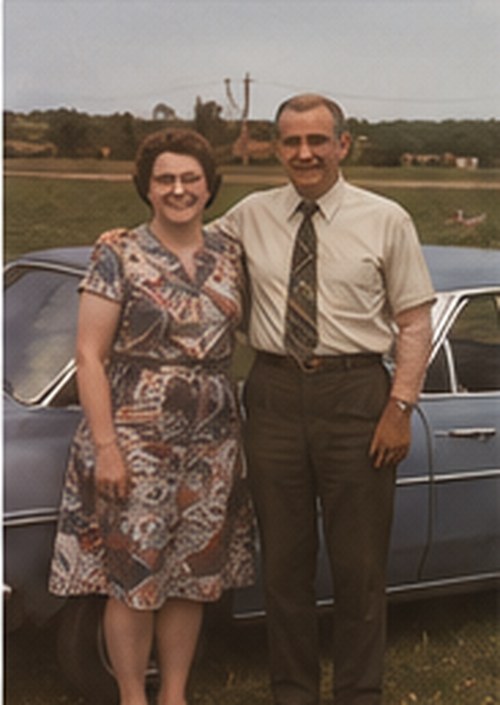
    Nell and Walter beside the car, Parma, 1974. The hardest year they had; you would not know it from the photograph.

  15. 1974document

    Note from Walter, left on the kitchen table

    Nurse, Gone to Brook Park, they said come at 7 and I'd rather be early than right. I know it's been a year. I know what you picked up so we could hold on and I

  16. 1975photo

    Photograph

    The back steps Walter rebuilt in 1974. Twice. Kathleen, Michael and Susie sitting on them the summer after he got on at Ford.

  17. 1979story

    What did your family do every single year without fail?

    Christmas Eve, no meat, the fishes, and midnight Mass. And every Sunday of my life, her sauce. The recipe was not written down anywhere until I made her sit at

  18. 1979document

    The Sunday sauce card, with her mother's corrections

    Meatballs & Sunday Sauce. Mom's. 2 lbs ground beef. 1 lb ground pork. 1 cup plain breadcrumbs. 1/2 cup grated Romano. 2 eggs. 1/2 cup chopped parsley. 3 cloves

  19. 1981story

    Was there a moment at work you were genuinely proud of?

    There was a girl came in one night in about 1981, nineteen or twenty, and everybody had decided what her problem was before they walked in the room. I didn't th

  20. 1983photo

    Photograph

    Nell on the night shift at Parma Community General. Somebody on the ward took it. She is holding a cup of coffee and looking at something out of frame.

  21. 1985photo

    Photograph

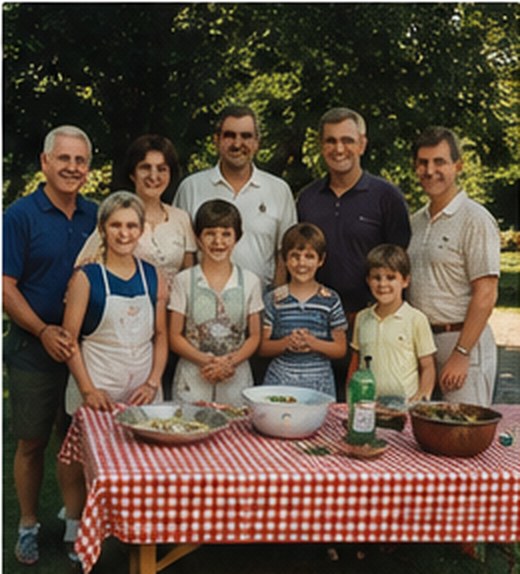
    The family cookout at the Holy Rosary hall, summer 1985.

  22. 1998photo

    Photograph

    Back at Geneva-on-the-Lake, July 1998. The cottage was long gone. They went anyway.

  23. 2011story

    What is the hardest stretch you've lived through?

    Walter died in March of 2011. It wasn't sudden and it wasn't long, it was about seven weeks, and I had thirty-one years of knowing exactly what was happening at

  24. 2018photo

    Photograph

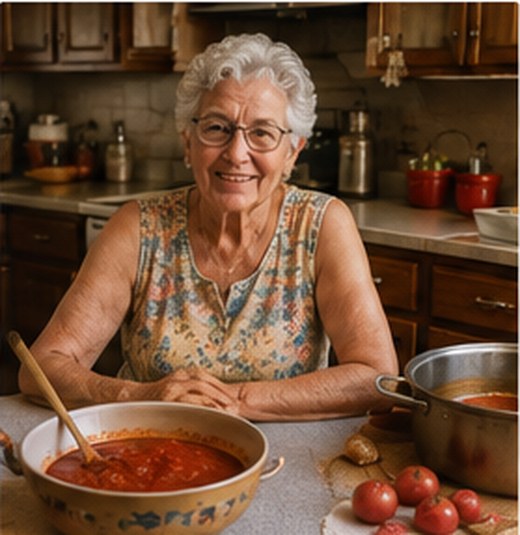
    Nell at the kitchen table in Parma, 2018. Sunday sauce in her mother's bowl.

Nell's stories

Childhood

Describe the house you grew up in. Start at the front door and walk me through it.+
It was a double on Mayfield, and we had the bottom. You came in off the porch into a front room my mother kept for nobody. There was a davenport in there with a cover on it, and the cover came off maybe twice a year, Christmas and if the priest came. Past that was the middle room where we actually lived, then the kitchen at the back, which was the whole house as far as I'm concerned. Everything happened in the kitchen. Three bedrooms off a hall, except one of them was really a closet with ambitions. Josie and I shared. Danny got the closet because he was the boy. There was a coal chute on the side of the house and a cellar that flooded every spring like it had an appointment.
What did your childhood kitchen smell like?+
Garlic and sauce, and the gas from the stove that never quite lit right the first time. On Sundays it was sauce, from seven in the morning, with the meatballs going in around ten. The whole street smelled like it, and you learned to tell whose sauce was whose walking home from Mass. You were not allowed to touch the pot, and everybody touched the pot. The rest of the year, cabbage. I won't romanticize the cabbage.
Who was in charge of you as a child, and what were they like when they were in a good mood?+
My mother was in charge. My father was tired. When she was in a good mood she sang, and she only knew Italian songs, so we didn't know what any of them were about. Could have been filthy for all I know. She had a laugh that came out like she was surprised by it. When she wasn't in a good mood the house got very quiet and you found somewhere else to be.

Your parents

What did your father do when he was happy?+
He'd take his shoes off and put his feet on the chair across from him and not say anything for about an hour. That was it. That was happy. He worked at Otis Steel and he came home gray. Not dirty exactly. Gray, all the way through, like the color had been taken out of him. My mother put a towel on the chair before he sat down. He wasn't a talker. But if you sat with him he'd let you sit as long as you wanted, and he never once told me to go do something else. I've thought about that a lot. He gave me his time even when he had nothing else left. That's not nothing.
What did your family argue about?+
Money, but never out loud. It was all done in looks. The one thing they actually fought about was English. My father wanted us speaking English in the house, no Italian, because he thought it would hold us back. My mother thought that was the stupidest thing she'd ever heard and kept right on. So we grew up half and half, and now I can't really speak it, I can only understand it, which is the worst of both. I can still say the prayers, though. Those went in early.
Tell me about your brother Danny.+
Danny was three years up on me and he was the funny one. He could do anybody, the priest, the man at the bakery, our father, which took nerve. He went to Korea in '52. He was seventeen and he lied about it and my mother signed the paper because he wore her down. He came back different. That's all I'll say about that part. He came back and he didn't do the voices anymore. He went out to California in about '58 and after a while the letters stopped. I don't know. I've never really known.
What were your three children like as small children?+
Kathleen came out organized. Two years old and lining things up. She has never in her life been late and she thinks the rest of us are doing it on purpose. Michael was the sweet one and the one who got hurt the most, in both senses. Broke his arm twice on the same tree. Susie was the negotiator. Four years old, arguing bedtime like a lawyer. I used to say to Walter, that one will either run a company or rob a bank. She runs a company. So.

What you wanted

What did you want to be when you were young, before anyone talked you out of it?+
A doctor. And nobody talked me out of it exactly, it just was not a sentence anybody said out loud in that house in 1954. Sister Bernadette said don't be a secretary and I heard nurse, because nurse was the largest thing I could picture. That wasn't her fault. It was as far as the imagination went. I don't say this bitterly. I was very good at what I did. But if you're asking what I wanted, I wanted the other one.
What's something you always meant to do and haven't yet?+
See the Pacific. I've never seen it. Danny wrote about it from Pendleton in '52, about a fellow from Montana who'd never seen the ocean and still got up early for it every day. I was fourteen and I've carried that sentence around for seventy-four years. Emma keeps saying she'll take me. I keep saying we'll see, which is what my mother said, and it meant no.

Work

What was the first job you were ever paid for, and what did you do with the money?+
I cleaned at the funeral home on E. 62nd, Saturdays, when I was fifteen. Mostly the front rooms and the glass. They kept everything very warm in there, which I've since learned is on purpose. I gave most of it to my mother and kept a little. I bought a pair of shoes with a heel on them that I had no occasion to wear. Wore them anyway. Wore them to the grocery.
Walk me through an ordinary workday at the job you held the longest.+
Nights at Parma Community, from 1970 until I retired in '96. Eleven to seven. I'd leave the house at ten-thirty with Walter already asleep and the kids' lunches made and sitting in the icebox. Report at eleven, the day nurse tells you what's what, who's confused, who's in pain and lying about it. Then rounds. The thing about nights is people are honest at three in the morning. They'll tell a stranger in the dark things they won't tell their own family. I heard a lot of confessions I didn't ask for. Around five you start getting them up. By seven you hand it over and you drive home into the sun, which is a terrible way to drive. Thirty-one years. I'd do it again, but I'd sleep more.
What did people tell you at three in the morning?+
That they were frightened. Mostly that. And regrets, but never the ones you'd think. Nobody ever said they wished they'd made more money. It was always a person. Somebody they didn't call, or a brother they fell out with over something they couldn't even remember by then. I had a man tell me he'd never once told his son he was proud of him and now the son was fifty and it was too late to start. He was crying and he was embarrassed about crying. I told him it wasn't too late and he said it was. I called Kathy the next morning at six-thirty and woke her up for no reason. She still brings it up.
Was there a moment at work you were genuinely proud of?+
There was a girl came in one night in about 1981, nineteen or twenty, and everybody had decided what her problem was before they walked in the room. I didn't think that was it. I sat with her and I asked her different questions and it turned out to be something else entirely and we caught it in time. I don't want to make it sound like I saved anybody. The doctor saved her. But I was the one who asked. That's the whole job, really. Asking properly.

Love and partnership

Tell me about the day you met Walter. Where were you, and what was he wearing?+
A dance at the Holy Rosary hall on Mayfield, September of '59. I'd just finished at St. Alexis and I had money for the first time in my life. He was in a brown suit that was too warm for the room and he was standing by the door like he was pricing the building. Irish, in that hall, on that street, he stood out like a lamp. He asked me to dance and he was bad at it. Genuinely bad. And he knew it and he did it anyway, which I decided told me something about him. Turned out I was right. He was bad at a lot of things and he did them anyway.
When did you know it was serious?+
My father didn't like him. Not because of anything Walt did, because he was Irish and because my father had a list. Walter kept coming to the house anyway. Every Sunday for about four months, and he'd sit with my father in that front room nobody used, and my father would say maybe nine words, and Walter would talk about the Indians' pitching and drink the coffee he was given and then go home. And one Sunday in the spring my father said to me, in Italian so Walt wouldn't catch it, he said, that one doesn't give up. That was the blessing. That was all I got and it was plenty. I knew then.
What was the hardest year the two of you had?+
1974. He got laid off in the February and he was out fourteen months. Walter was a man who needed to be useful the way other people need air. He painted the whole house inside. Twice. He rebuilt the back steps that didn't need rebuilding. And he got very quiet, and quiet on Walter was not natural. I picked up doubles. We didn't talk about it. That's how we did things, which I'm not recommending. What I remember is the day he got on at Ford in Brook Park. He came in and stood in the kitchen doorway and he didn't say anything, he just nodded at me, and I sat down on a kitchen chair and I cried, which I never did in front of him. Then I got up and made dinner. We never once discussed that year afterward. Not once in thirty-seven years.
What did you two find funny that nobody else did?+
He used to read the obituaries out loud and make up how they really died. Terrible. We'd be crying laughing at the kitchen table and the kids would come in and ask what's funny and there was no way on God's earth to explain it. He also called me "Nurse" for forty-nine years. Never Nell in the house. It started as a joke I don't remember the beginning of and then it was just my name. I still hear it sometimes. Not in a spooky way. Just the house makes a noise and my ear does the rest.

Hard times

What is the hardest stretch you've lived through?+
Walter died in March of 2011. It wasn't sudden and it wasn't long, it was about seven weeks, and I had thirty-one years of knowing exactly what was happening at every stage, which I had always assumed would be a mercy. It is not a mercy. I want that on the record. Knowing is not a mercy. I nursed him at home and I did it well and I was very calm, and then about two months after, I couldn't find the lid to a Tupperware and I sat down on the kitchen floor and stayed there a while. That's how it comes. Not at the funeral. In the kitchen, over a lid.
Who showed up for you when things were bad?+
Josie came and stayed eleven days and didn't ask me a single question, which was exactly right. And a woman from up the street I'd never much liked, Dolores, brought a casserole every Thursday for four months. Every Thursday. I'd never given her the time of day. I still don't fully understand it and I've stopped trying to. You find out. That's the thing nobody warns you about. You find out who, and it isn't always who you'd have guessed, and you have to make your peace with the ones who didn't come.

Learning

Which teacher do you still remember, and what did they do that stuck?+
Sister Bernadette, eighth grade at Holy Rosary. She kept me after class one day and I thought I was in trouble. She said, you're going to be told you should be a secretary. She said, don't be a secretary. And then she let me go. That was the whole conversation. I have thought about that woman my entire life. She was maybe five feet tall and she was right.
What were you good at as a student, and what were you hopeless at?+
Good at anything with a right answer. Arithmetic, science, spelling. I liked knowing whether I'd got it. Hopeless at anything where you had to say what a poem meant. It meant what it said. I still think that.

Traditions and holidays

What did your family do every single year without fail?+
Christmas Eve, no meat, the fishes, and midnight Mass. And every Sunday of my life, her sauce. The recipe was not written down anywhere until I made her sit at the table in 1979 and tell me while I wrote. I have that paper. It's in the drawer under the phone. Her handwriting's on it where she corrected me twice. Kathleen makes it now. Hers is better than mine, and I've decided not to tell her.

Recipes and cooking

What dish do people ask you to make? Give me the whole thing: amounts, method, all of it.+
The meatballs and the sauce. It's the only thing anybody asks me for. Two pounds of beef and one of pork. A cup of plain breadcrumbs, half a cup of grated Romano, two eggs, half a cup of chopped parsley, three cloves of garlic, salt, black pepper. It's all on the card in the drawer, in my handwriting, with my mother's corrections in red where she disagreed with how I did it. Roll them with a wet hand and don't overmix them. That's her first correction, in red: don't overmix, they get tough. She watched me do it wrong for a year before she wrote it down. Brown them in the pot, then the tomatoes, crushed by hand, and the lowest flame you have until the middle of the afternoon. Low and slow. The sauce should bubble, not boil. That's her other correction. A wooden spoon and never a metal one, though I could not tell you why. Serve it with rigatoni. Sunday. Family. That's the rule. I wrote that part myself. Kathleen's are better than mine now. I haven't told her.

Favourites

What song do you never get tired of?+
“Moon River.” Andy Williams, not the other ones. It was on in the car the first time Walter drove us out to look at the house in Parma, and neither of us said anything the whole song. I don't know why that's the one that stuck.
What's your favourite meal, the one you'd choose for a birthday?+
Roast chicken, potatoes done in the fat, and a lot of butter on everything. I'm not a complicated eater and I've never pretended to be. Susie took me to a place in Cleveland once where the food came on a slate and I said, Susan, this is a roof tile.
What smell takes you straight back somewhere?+
Sauce on a Sunday morning. That's Mayfield Road, and my mother's hands, and being about seven. Also, this is a strange one, the inside of a hospital linen cupboard. Bleach and hot cotton. Thirty-one years. It doesn't make me sad, it makes me feel useful.
What's your favourite thing you own that isn't worth anything?+
The recipe card in my mother's handwriting, in the drawer under the phone. She corrected me twice on it, in pen. “Nell, you rolled it too thick.” I've never wanted that fixed.
Where's your favourite place to sit in your own home?+
The kitchen chair nearest the window, facing the back steps. I've sat there since 1963. Walter's chair was the other one and nobody sits in it, not because of anything sentimental, it's just that the leg is bad and I keep meaning to fix it.
What was the best trip you ever took?+
Geneva-on-the-Lake, every August from about 1966. Walter rented the same cottage six summers running and it was a bad cottage. The roof let go every time it rained and the screen door never once shut on the first try. We kept going back because the kids were happy there in a way I could watch from a chair. Michael caught his first fish off that dock. Susie sold painted rocks to strangers on the strip and made more money than the rocks were worth. The last summer, Walter fixed the screen door without being asked. The owner knocked two dollars off. That was the whole vacation economy of it. I would go back tomorrow, and the cottage is long gone.

Small details

Tell me about a car you remember.+
A 1954 Chevrolet Bel Air, second-hand, green, bought in 1961 for something like three hundred dollars. The heater didn't work and Cleveland is Cleveland, so we drove all winter with a blanket over our knees like a pair of pensioners at twenty-three. It rusted out from underneath by about '68 and we sold it to a man on the next street for parts.
Tell me about getting the house in Parma.+
The house on Ridgewood in Parma, 1963. Fourteen thousand, eight hundred dollars. Walter's hands shook signing it. We had a card table and two chairs in the front room for about five months. I'm still in it. Sixty-three years next spring.
Did you have any pets when the children were small?+
A dog called Rusty when the kids were small, some sort of terrier, entirely Michael's, followed him everywhere. Then a cat called Sister, which the children found hilarious and I did not name. Nothing since Walter. I'm not going to outlive another one.
What jobs have you had, in order?+
Cleaning at the funeral home on E. 62nd, Saturdays, from about 1953. Then nurse's aide at St. Alexis while I was training, 1956 to '59. Then floor nurse at St. Alexis, '59 to '62. Then I was home with the children. Then Parma Community General from 1970 to 1996, nights the whole way. That's it. Two hospitals and a funeral home.

What you're good at

What can you do with your hands that most people can't?+
I can put a line in a bad vein. That sounds like nothing but it isn't, a lot of people can't, and the person on the end of it knows immediately whether you can. And I can turn a collar on a shirt so you can't see it's been done. My mother taught me that during the war years when you didn't throw a shirt away for a collar.

What you believe

What did you believe strongly at twenty-five that you no longer believe?+
That if you did everything right, it would come out right. I believed that completely. I was raised on it: you work, you don't complain, you go to Mass, and the thing holds together. Then you spend thirty-one years on a night shift watching who gets sick and who doesn't and you understand it isn't a ledger. It never was a ledger. Good people got terrible news in front of me on a Tuesday for three decades. I still think you should do everything right. I just don't think you're owed anything for it. Those turn out to be two different ideas.
Where did you get your sense of right and wrong?+
The church gave me the rules and my mother gave me the actual thing, and they didn't always agree. The church said a lot about sin. My mother fed people. There'd be somebody at that table on a Sunday who wasn't family and wasn't invited and nobody ever remarked on it. A man from the parish who'd lost his wife. A cousin of a cousin. You set another place and you didn't make a thing of it. That's the part that stuck. Not the rules. The extra plate.
What do you think happens to people after they're gone?+
I go back and forth, and I'm eighty-eight, so you'd think I'd have settled it. I was taught heaven and I'd like it very much. Some days I believe it outright. Other days I think it's a lovely thing we made because the alternative is unbearable, and that making it doesn't necessarily make it false. What I'm certain of is smaller. I'm certain that Walter is in the way Michael stands. I'm certain my mother is in that recipe. That much I can see with my own eyes, and I'm not going to argue about the rest.

Advice

What advice were you given that turned out to be wrong?+
Don't make a fuss. I was told that a thousand times and I passed it on, God help me, and it's wrong. It's how my father died younger than he should have, he had chest pain for a year and didn't make a fuss. Make the fuss. Be a nuisance about it. I spent thirty-one years watching people die of not wanting to be a bother.
What do you wish someone had told you at thirty?+
That the marriage wasn't going to be one long thing. It was going to be four or five different marriages to the same man and you'd have to keep starting. Nobody tells you that. You get the wedding and then you're on your own with it. Also that it was fine to be tired. I lost a lot of hours being ashamed of being tired.

For the people after you

What do you want your grandchildren to know about you that they'd never guess?+asked by Emma
That I was funny. I don't think they've got any idea. By the time you all knew me I was the grandmother in the chair with the opinions. But I was very funny in about 1968. Ask your grandfather, well. You can't. But I was. And that I was frightened most of the time and did it anyway. Everybody looks brave from the outside once it's over.
Is there something you've never said out loud that you'd want us to hear?+asked by Emma
I should have gone to California and found Danny. I had the money by 1970 and I had the time and I told myself I didn't. I was afraid of what I'd find and I dressed it up as being busy for about fifty years. If any of you ever get to the point where you're deciding whether to go, go. It costs less than the other thing. I can tell you exactly what the other thing costs, because I've been paying it since 1958.

Photographs

What matters isn't the picture. It's what Nell said about it.

The Russo children on the porch steps on Mayfield. Danny is the one squinting. Nell is in the middle in the dress her mother made from a curtain.
The Russo children on the porch steps on Mayfield. Danny is the one squinting. Nell is in the middle in the dress her mother made from a curtain.Danny Russo · Eleanor Marie Doyle · Josephine Russo
Danny in Korea, 1952. He sent it to their mother with nothing written on the back.
Danny in Korea, 1952. He sent it to their mother with nothing written on the back.Danny Russo
Nell in her graduation whites, St. Alexis Hospital School of Nursing. She said the cap never stayed on and she hated it her whole career.
Nell in her graduation whites, St. Alexis Hospital School of Nursing. She said the cap never stayed on and she hated it her whole career.Eleanor Marie Doyle
Wedding at Holy Rosary, June 1961. Frank Russo on the left, not smiling, which Nell insisted meant he was pleased.
Wedding at Holy Rosary, June 1961. Frank Russo on the left, not smiling, which Nell insisted meant he was pleased.Eleanor Marie Doyle · Walter Doyle · Frank Russo
The Holy Rosary Social Club, 1962.
Nell and Walter beside the car, Parma, 1974. The hardest year they had; you would not know it from the photograph.
Nell and Walter beside the car, Parma, 1974. The hardest year they had; you would not know it from the photograph.Eleanor Marie Doyle · Walter Doyle
1975
The back steps Walter rebuilt in 1974. Twice. Kathleen, Michael and Susie sitting on them the summer after he got on at Ford.Kathleen Doyle · Michael Doyle · Susan Doyle
1983
Nell on the night shift at Parma Community General. Somebody on the ward took it. She is holding a cup of coffee and looking at something out of frame.Eleanor Marie Doyle
The family cookout at the Holy Rosary hall, summer 1985.
The family cookout at the Holy Rosary hall, summer 1985.Kathleen Doyle · Michael Doyle · Susan Doyle
Back at Geneva-on-the-Lake, July 1998. The cottage was long gone. They went anyway.
Back at Geneva-on-the-Lake, July 1998. The cottage was long gone. They went anyway.Eleanor Marie Doyle · Walter Doyle
Nell at the kitchen table in Parma, 2018. Sunday sauce in her mother's bowl.
Nell at the kitchen table in Parma, 2018. Sunday sauce in her mother's bowl.Eleanor Marie Doyle
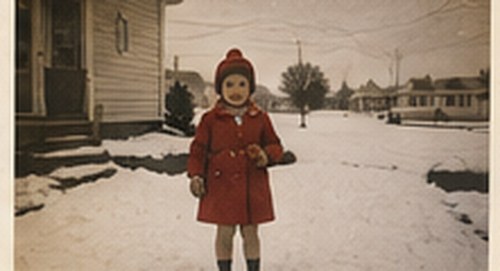
Winter on Mayfield. Nobody remembers who took it.

Letters and papers

Letter from Danny, Camp Pendleton

Danny Russo · 1952

Nell, Tell Ma I'm eating. Tell her twice, she won't believe it the first time. It's hot here in a way that Cleveland doesn't do. Everybody's from somewhere I never heard of. There's a fellow from Montana who has never seen the ocean and now he sees it every day and he still gets up early for it. Don't let Josie in my things. I know what she's like. I'll write when I know something. Don't tell Ma that part. Dan

Note from Walter, left on the kitchen table

Walter Doyle · 1974

Nurse, Gone to Brook Park, they said come at 7 and I'd rather be early than right. I know it's been a year. I know what you picked up so we could hold on and I know you won't let me say it out loud so I'm putting it here where you have to read it. Whatever happens today, I'm not going to be like this much longer. That's a promise and you can hold me to it. Steps are fixed. Again. W.

The Sunday sauce card, with her mother's corrections

Eleanor Marie Doyle · 1979

Meatballs & Sunday Sauce. Mom's. 2 lbs ground beef. 1 lb ground pork. 1 cup plain breadcrumbs. 1/2 cup grated Romano. 2 eggs. 1/2 cup chopped parsley. 3 cloves garlic, minced. 1 tsp salt. 1/2 tsp black pepper. Serve with rigatoni. Sunday. Family. That's the rule. In her mother's hand, in red: Don't overmix. They get tough. Low and slow. Sauce should bubble, not boil.

The people in it

Frank Russo

Father · also “Pop”, “Franco”

Came from Italy at nineteen and worked steel until it took the colour out of him. Said nine words when it mattered most.

Mary Russo

Mother · also “Maria”, “Ma”

Ran the house, sang Italian songs nobody understood, and fed whoever turned up at the table. Never wrote her recipe down until Nell made her.

Danny Russo

Brother · also “Dan”

The funny one, and the best mimic in the family. Lied about his age to enlist at seventeen. Came home changed, and went out to California.

Josephine Russo

Sister · also “Josie”

Three years younger.

Walter Doyle

Husband · also “Walt”

A terrible dancer who kept dancing anyway. Won over her father by turning up every Sunday for four months. Called her Nurse for forty-nine years.

Kathleen Doyle

Daughter · also “Kathy”

Born 1962.

Michael Doyle

Son · also “Mike”

Born 1964.

Susan Doyle

Daughter · also “Susie”

Born 1968.

Emma Doyle

Granddaughter

Kathleen's oldest.

Ben Doyle

Grandson

Michael's son.